The Flat Tax at Work in Russia
February 21, 2002
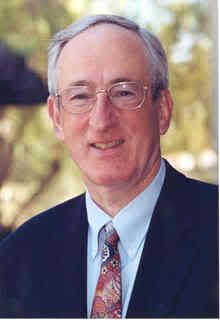
By Alvin Rabushka
On March 25, 1981, I first proposed the idea of a flat tax on the editorial page of The Wall Street Journal in an article entitled “The Attractions of a Flat-Rate Tax System.” Later that year, on December 10, 1981, Robert E. Hall and I set forth the mechanics of a specific flat tax proposal in an article entitled “A Proposal to Simplify Our Tax System.” Twenty years later, the flat tax has become a reality in, of all places, the Russian Federation.
Since the emergence of the Russian Federation a decade ago, taxpayer compliance has been a problem. To help resolve this problem and improve incentives, the Russian government enacted in July 2000 a 13% flat-rate tax on personal income. It took effect on January 1, 2001, replacing the previous three-bracket system, which imposed a top rate of 30% on taxable income exceeding $5,000. President George W. Bush praised Russia’s flat tax in each of his meetings with President Vladimir Putin, most recently during their November 15, 2001, press conference held at Crawford High School.
A year has passed since its implementation, which provides an opportunity to evaluate its success.
From a revenue standpoint, the 13% flat tax has exceeded all expectations. Preliminary data for 2001 reveal that the flat tax generated R254.7 billion, an increase of R80.2 billion over 2000, up 46%. ($1 = R30.8) Adjusting for ruble inflation of about 18% during 2001, real ruble revenues increased about 28%. Personal income tax, which contributed 12.1% to consolidated budget revenues in 2000, amounted to 12.7% in 2001. Since economic growth in 2001 of 5.2% was lower than the record 8.3% growth in 2000, the substantial rise in personal income tax revenue cannot be attributed solely, or even largely, to last year’s growth, but rather to the tax reform itself.
It is estimated that 60 million Russian employees receive salaries or wages subject to personal income tax. In tax year 2000 (the deadline for filing was May 3, 2001), only 2.8 million individuals filed tax returns. This small number is due to the fact that, for most employees, income tax is calculated and withheld monthly by employers and remitted directly to the Russian Treasury. Individuals need not file a return unless they owe additional taxes from other sources of income or seek a refund because of special deductions or credits.
Sole proprietors can choose to pay imputed income tax instead of filing a tax return. In tax year 2000, some 1.336 million individuals chose this option, which also reduces the number of returns.
Before examining the tax form itself, it should be noted that the new tax includes two higher brackets. Dividends are taxed at 30%. However, double taxation on corporate income has been abolished. Since the corporate tax rate fell from 35% in 2001 to 24% on January 1, 2002, it is likely that the tax on dividends will be lowered in the future. In addition to dividends, foreigners and Russians who reside in Russia less than 183 days during the tax year are taxed at a rate of 30% on their taxable income. Other sources of income (e.g, lotteries) are taxed at 35%. The higher rates on dividends and other sources of income reflect a Russian distinction between so-called “unearned income” and “earned income” (even though capital gains on homes and securities are exempt).
Russia’s basic flat tax form, Form 3, resembles U.S. Form 1040A, with one addition. Form 3 is used to report income from wages and salaries (Form 1040A), along with professional income (Schedule C). For most taxpayers, required information can be reported on Form 3. Individuals with self-employment and other sources of income, and/or who are able to itemize specific deductions, may need to attach several supplementary schedules. Altogether, taxpayers can attach up to 10 supplementary schedules (A, B, V, G, D, E, Zh, Z, I, and K—the Russian alphabetical order transliterated according to the Library of Congress convention). For a small number of taxpayers, the Russian individual tax return is more complicated to file, closer to Form 1040. Some Russians will likely avail themselves of the Russian version of H & R Block. The tax form recognizes this complexity by including space for the signature of a professional tax preparer.
Form 3 is only two pages long. The first page includes the taxpayer’s name, taxpayer identification number, details of a photo ID, period of residence and citizenship (for foreign nationals), permanent address, and number of supplementary documents. Page 2 of form three on which financial data are reported consists of 5 sections. Sections I through IV contain 13 lines on which salaried employees and small business owners, or sole proprietors, report their income from all sources, expenses, allowable deductions, tax credits, and other pertinent items. Section V contains 4 lines that apply to self-employed professional persons for reporting estimated income on a quarterly basis (Form 1040-ES).
Here is the information that the taxpayer must report line by line.
Section I. Tax base (income) which is taxable at a 13% rate.
1. Wages, salaries, and small business income (gross income)
2. Total deductions (transferred and added from lines V3.2, G1.5, G2.6, D1.1, D2.1, E.4, Z3.6, and Z3.7 as described below)
V3.2: Total expenses related to individual entrepreneurship and private practice (small business expenses as reported on Schedule C)
G1.5: A deduction of up to R2000 for each the following types of partially taxable income (cash allowances from employer to retired employees due to age or disability, gifts that are exempt from the gift and inheritance tax, prizes in cash or kind won in contests sponsored by the government or a legislative body, and employer reimbursement of prescribed pharmaceuticals—total limit of R8000 from all four categories)
G2.6: Deductions from the sale of real property and financial assets. Deduction for housing and land owned less than five years is limited to documented costs up to R1 million; deduction for housing and land owned more than five years is unlimited. For non-financial real property owned less than three years, deduction is limited to R125,000; for non-financial real property owned more than three years, deduction is unlimited. For gains on the sale of financial assets, deduction is unlimited (capital gains reported on Schedule G)
D1.1: Expenses incurred in the production of income received from honoraria, publications, patents, and copyrights (reported on Schedule E)
D2.1: Expenses incurred in the production of income from contractual services under civil-law contracts (reported on Schedule C relating to Form 1099 Misc.)
E.4: Calculation of standard deduction (equivalent to personal exemptions). For example, R3000 per month for victims of nuclear disasters and disabled servicemen; R500 per month for other victims of war and radiation sickness; R400 per month for all other taxpayers until annual income exceeds R20,000; and R300 per month for each child under 18 years of age until the child’s parent or guardian’s income exceeds R20,000 in any tax year. Calculation of social deductions (equivalent to itemized deductions): for charitable contributions (limited to 25% of total revenue); self-financed education (limited to R25,000); children’s education (limited to R25,000 per child); medical and drug expenses (limited to R25,000);and catastrophic medical expenses (unlimited). Social deductions are granted only after the return is filed.
Z3.6: Expenses supported by documents for purchase and/or new construction of residential housing in 2001 (limited to R600,000) This excludes summer homes, or dachas.
Z3.7: Mortgage interest deduction on residential housing in 2001 (unlimited) Excludes summer homes, or dachas.
3. Calculation of tax due to be remitted from consolidated annual income (total taxable income), line 1 minus line 2.
4. Tax due: line 3 times 13%
II. Tax base which is taxable at a 30% rate
5. Total dividends (Schedule B); income of non-residents in Russia (less than 183 days)
6. Offsets (tax withheld by payer of dividends and remitted on behalf of recipient)
7. (Line 5 times 30%) minus line 6.
III. Tax base, which is taxable at a 35% rate.
8. Other income. Sources include: (1) gains and prizes from contests and games for the purpose of advertising, (2) winning of lotteries and pari-mutual bets, (3) net insurance receipts (4) bank taxable interest; and, (5) gains from loans at below-market rates.
Bank interest is taxable (1) when interest on ruble deposits exceeds 75% of the Central Bank’s refinancing rate, or (2) on foreign currency deposits if annual interest exceeds 9%. Material gains from borrowing are taxable if interest charged is below 75% of the Central Bank’s refinancing rate or below 9% if in foreign currency.
These adjustments amount to a proxy for inflation. The current Central Bank refinancing rate is 25%. Three-quarters of that is 18.75%. Most deposits earn less than 18.75%, which means that interest income is not generally subject to taxation.
9. Tax due (line 8 times 35%).
IV. Calculation of total amount of tax due from all sources of income
10. Sum of lines 4, 7, and 9 (total tax due)
11. Withheld taxes and estimated tax payments (total taxes paid)
12. Refund due
13. Additional tax due
V. Calculation of estimated income and estimated tax for private entrepreneurs, public notaries, and those in private practice.
14. Total estimated income (determined by taxpayer)
15. Total withholding, according to Articles 2.18 and 2.21 of the tax code
16. Total estimated taxable income
17. Total advance income tax payments
Lines 15, 16, and 17 are filled in by the tax authorities.
Russia’s personal income tax excludes income from a large number of sources. Examples include public welfare for the disabled and children, state pensions, alimony, grants received for development of science, education and art, compensation for natural disasters, enterprise-provided medical services, stipends to students, proceeds of part-time farming (food grown at dachas), income from amateur hunting, athletic prizes, interest on government debt, capital gains on government bonds, military pay, recipients of payments from labor-union sponsored athletic and cultural events, and others.
To summarize, the 13% flat tax has exceeded the expectations of the government in terms of revenue. For the vast majority of taxpayers, its implementation is simple and no forms need be filed. For small businesses, the 13% flat tax provides strong incentives and compliance is straightforward. Small wonder that President Bush had a gleam in his eye when he praised Russia’s flat tax. Perhaps he might take a lesson from President Putin as he considers his campaign themes for 2004.
(Anjela and Diana Kniazeva, graduate students at Stanford University, provided research assistance for the preparation of this article.)